How Calisthenics Teaches You to Actually Control Your Body
You Own a Body You've Never Really Met
Most people have lived inside their body for decades and still can't tell you where their hips are when they squat, why their shoulder creaks when they press overhead, or what their spine is actually doing when they bend forward. We move through life on autopilot — functional enough to get around, disconnected enough to never really notice.
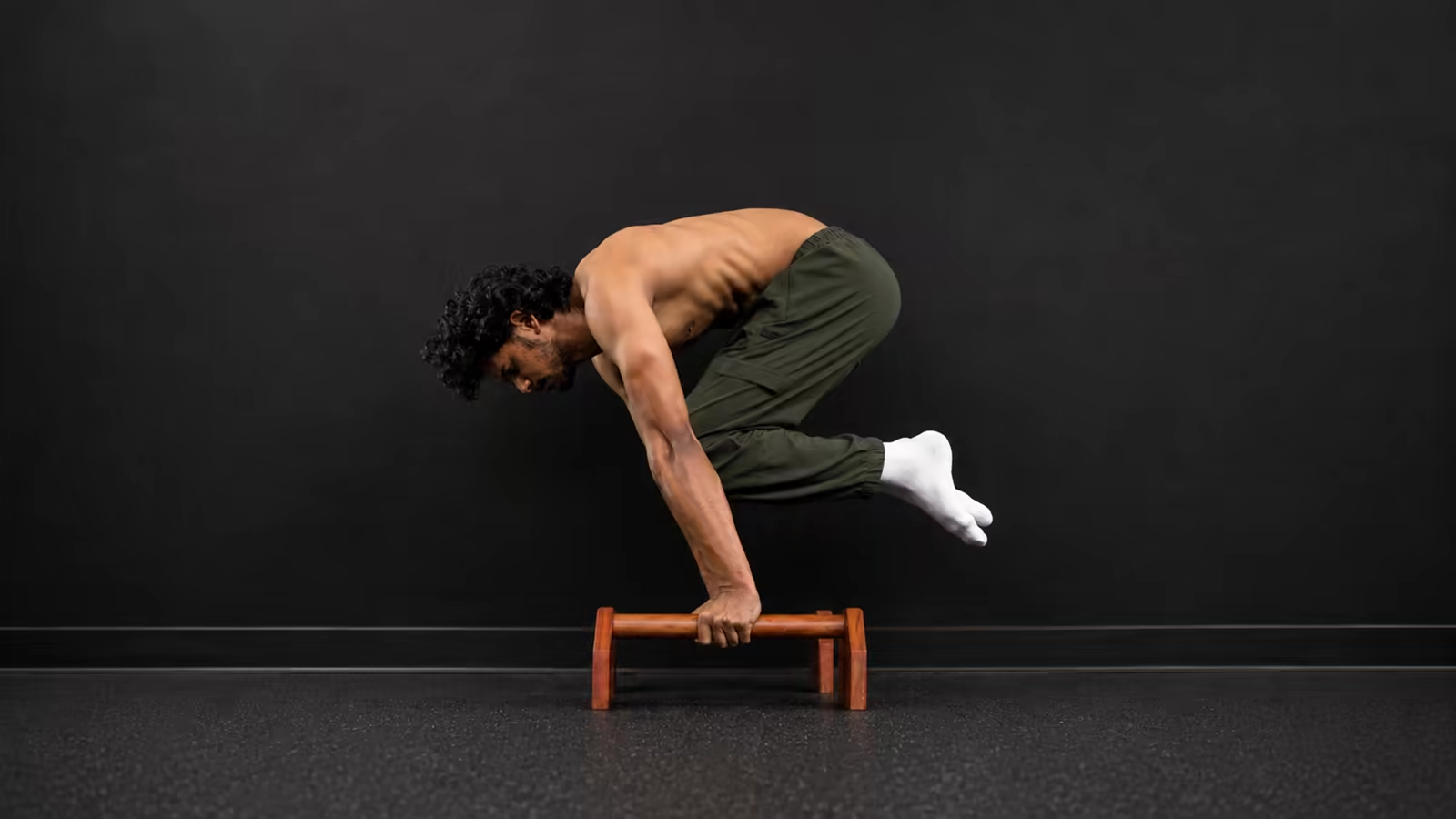
Then you try a calisthenics skill for the first time. A simple L-sit. A tuck hold. A slow negative push-up. And suddenly, you are extremely aware of your body — because it's loudly refusing to cooperate.
The moment your body resists you is the moment you start to actually know it.
This is the hidden education inside calisthenics. Not just stronger muscles — a fundamentally different relationship with how you move, where your weight lives, and what your nervous system is capable of. Body control isn't a bonus feature of calisthenics training. It's the whole point.
What Body Control Actually Means
Body control isn't a vague concept. It's made of specific, trainable components: proprioception — your sense of where your limbs are in space without looking; motor sequencing — your ability to fire muscle groups in the right order at the right time; tension management — knowing when to brace, when to relax, and how hard; and interoception — a deeper awareness of internal physical states like fatigue, compression, and load.
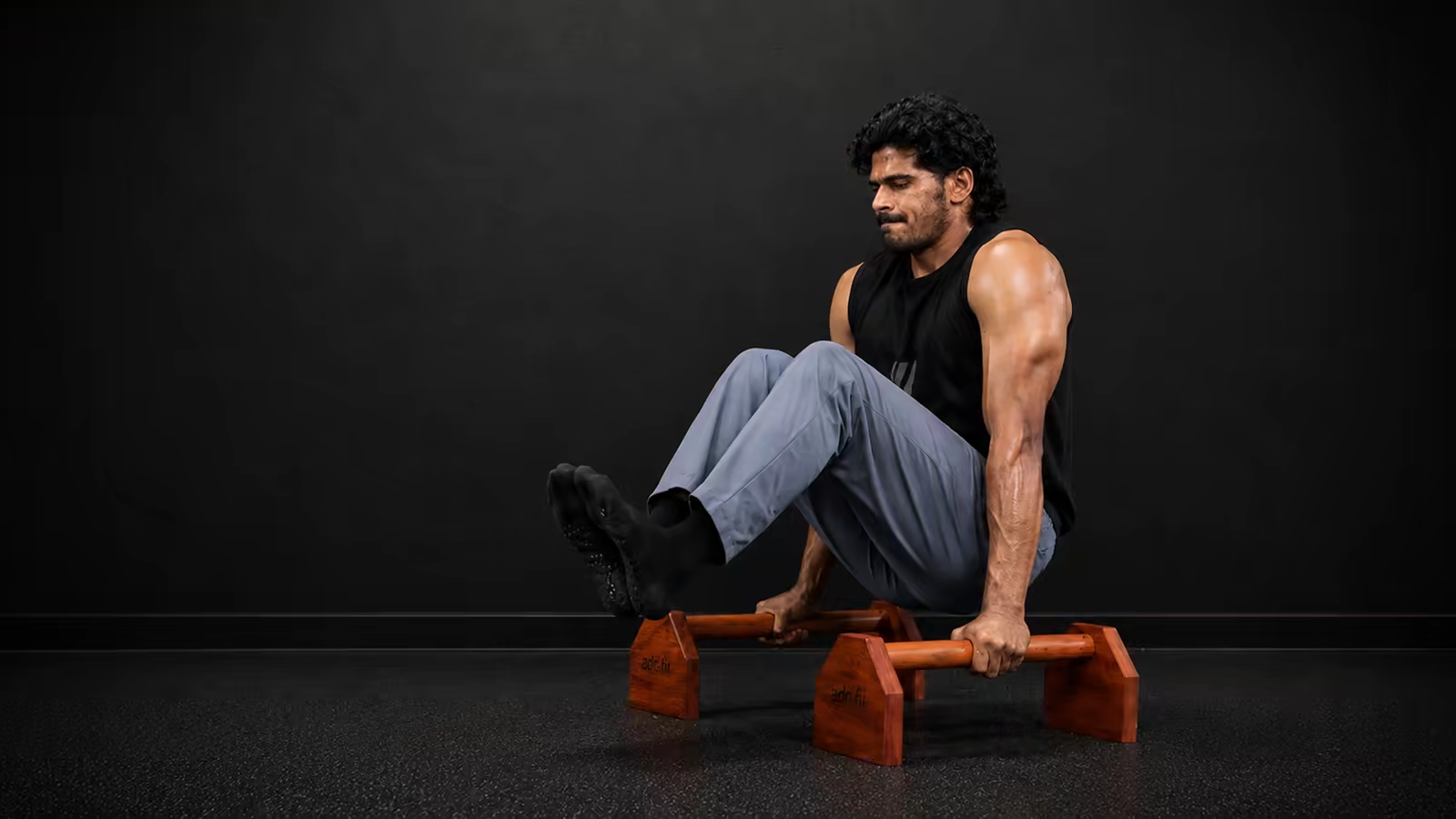
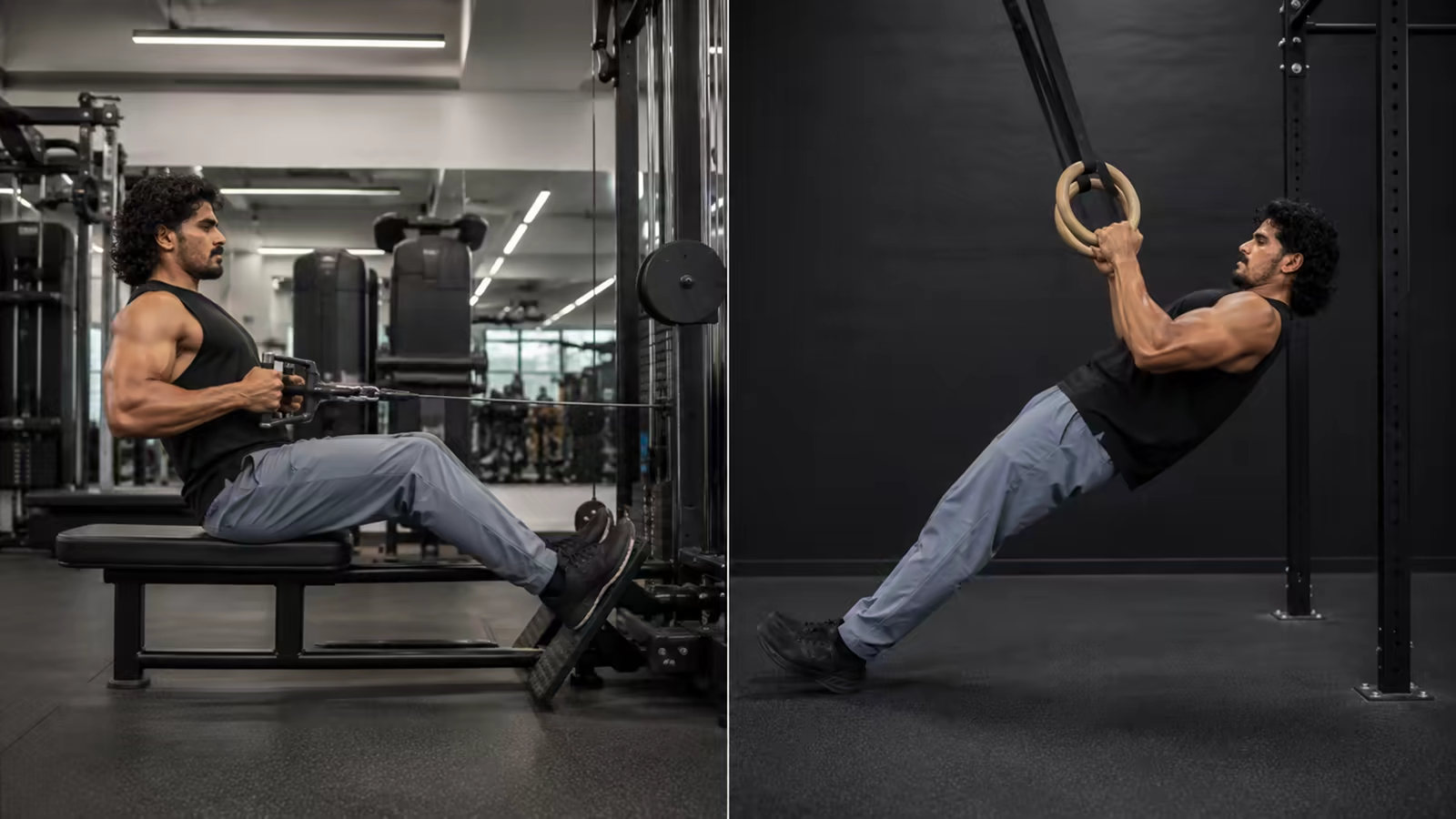
Weighted gym training builds strength but rarely demands all of these at once. A leg press machine tells your body exactly where to go. A barbell squat gives you a fixed path. Machines remove degrees of freedom — and degrees of freedom are where control is learned.
Machines make you stronger in straight lines. Calisthenics makes you stronger in space.
Bodyweight training removes the machine. Suddenly your body has to decide — where does the force go? How do I stabilize this? What fires first? Every repetition becomes a negotiation between intention and reality.
The Ring Dip That Broke My Confidence
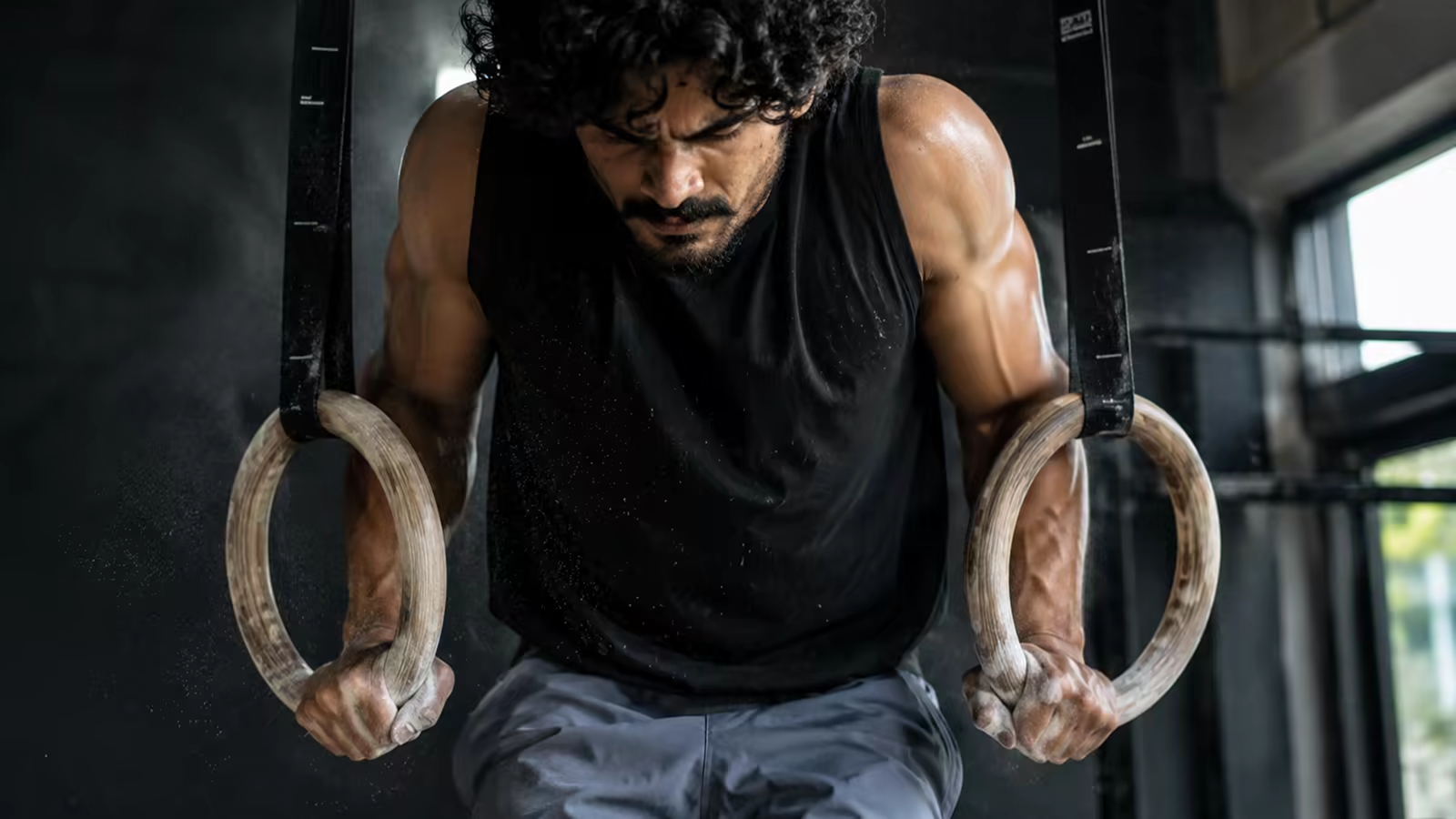
There's a moment almost everyone has on gymnastic rings. You can do twenty parallel bar dips. You've been doing them for months. You feel ready. You grab the rings, lower yourself down — and immediately shake like a leaf in a thunderstorm. The rings drift outward. Your elbows flare. You bail after three reps.
This isn't weakness. Your chest and triceps are the same strength they were five minutes ago. What the rings exposed is instability — the rotational and lateral forces your joints have never had to handle because bars always held them in place. The rings didn't make you weaker. They told you the truth about your strength.
Rings don't expose weakness. They expose specificity — the difference between strength you own and strength you borrowed from stable surfaces.
Training through that instability is how you build the real thing. Weeks of ring dip negatives, support holds, and slow eccentrics rewire your shoulder girdle to produce force across every angle, not just the one the bar allowed. That's body control — and it transfers everywhere.
Tension Is a Skill
One of the least-discussed lessons calisthenics teaches is how to produce full-body tension on demand. Not just squeezing one muscle group — but creating a connected chain of activation from fingertips to toes that turns your body into a single rigid structure.
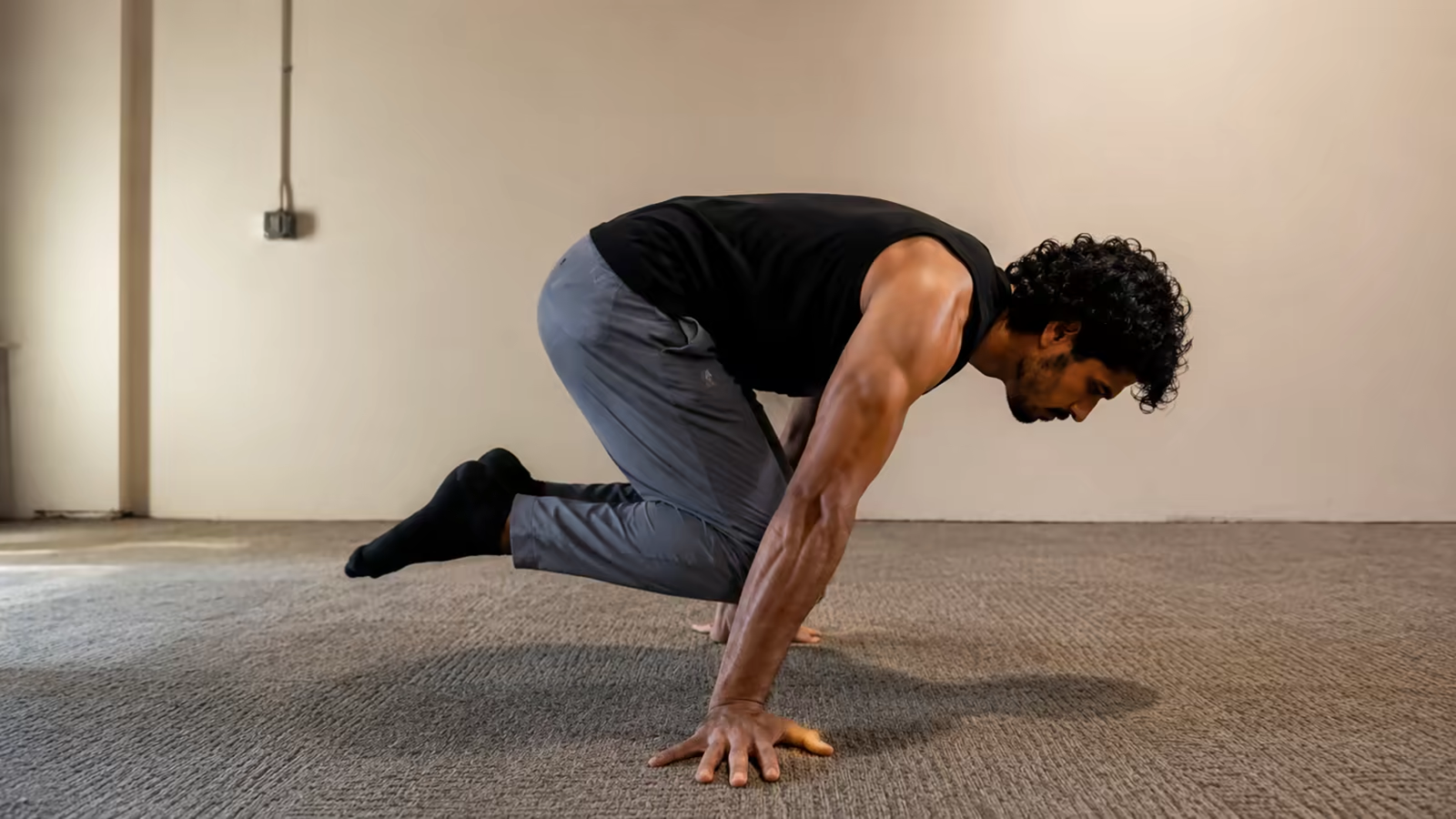
You feel this most clearly in a planche progression. A tuck planche isn't just about shoulder strength. It requires your core to be braced, your glutes locked, your toes pointed, your protraction maximal, and your entire posterior chain engaged simultaneously. If any link in that chain goes soft, the position collapses. The skill punishes disconnection immediately and rewards integration just as fast.
Learning to go fully tense is just as important as learning to go fully relaxed. Most people have never truly done either.
This full-body tension — sometimes called irradiation in motor learning — becomes a tool you carry into everything. Athletes who train planche progressions seriously often notice their deadlift, their sprinting, and even their posture change. Because now they know how to brace the whole system, not just load the biggest muscles.
Slow Is the Teacher
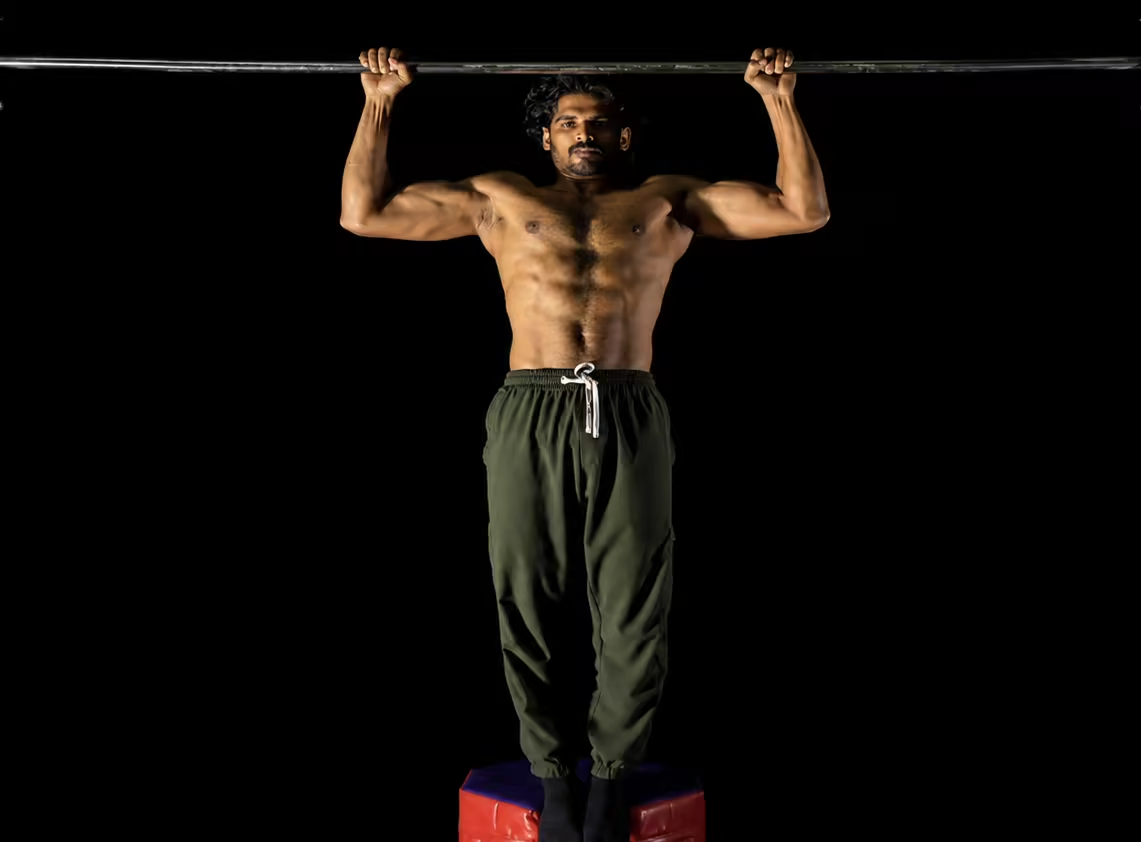
Speed hides incompetence. This is one of the oldest coaching observations in movement sports — and it applies perfectly to calisthenics. A fast pull-up can be momentum and habit. A three-second negative pull-up cannot lie. Every degree of the movement is exposed, and your control over it is either there or it isn't.
Slow training isn't just harder. It's more informative. When you lower yourself from a bar over five seconds, you feel the exact point where your shoulder shifts, where your elbows want to flare, where your core stops contributing. Those are the signal flares your nervous system sends to tell you what needs work. Speed mutes them.
If you can only do a movement fast, you can't really do it yet. Slow it down until you own it.
Tempo work — slow negatives, paused reps, isometric holds at sticking points — is one of the most underused tools in bodyweight training. It bridges the gap between being able to do a movement and actually controlling it. And in calisthenics, that gap is where all the interesting growth lives.
The Mental Side Nobody Prepares You For
Body control isn't purely physical. There's a mental architecture being built alongside the physical one — the ability to hold focused attention inside a movement while it's happening, to stay present under physical discomfort, and to make micro-decisions in real time rather than checking out and grinding through.
Skilled calisthenics athletes describe training certain skills as almost meditative. A handstand session demands complete presence. Your mind cannot wander when your entire body's stability depends on continuous small corrections. The training itself enforces a kind of focused awareness that's increasingly rare.
A handstand gives your mind nowhere to hide. That's not a side effect of the training — it might be the most valuable part of it.
Over time, this quality bleeds outward. Athletes who train body control seriously often describe moving through the world differently — more aware of how they sit, how they walk, how they breathe under stress. The body becomes a thing they inhabit rather than a vehicle they pilot from somewhere inside their head.
Prerequisites Are the Map, Not the Obstacle
One of the reasons beginners struggle to develop body control isn't effort — it's order. They attempt skills their nervous system isn't ready for, get frustrated by the failure, and either push harder into the same wall or quit entirely. The skills themselves aren't the problem. The missing prerequisites are.
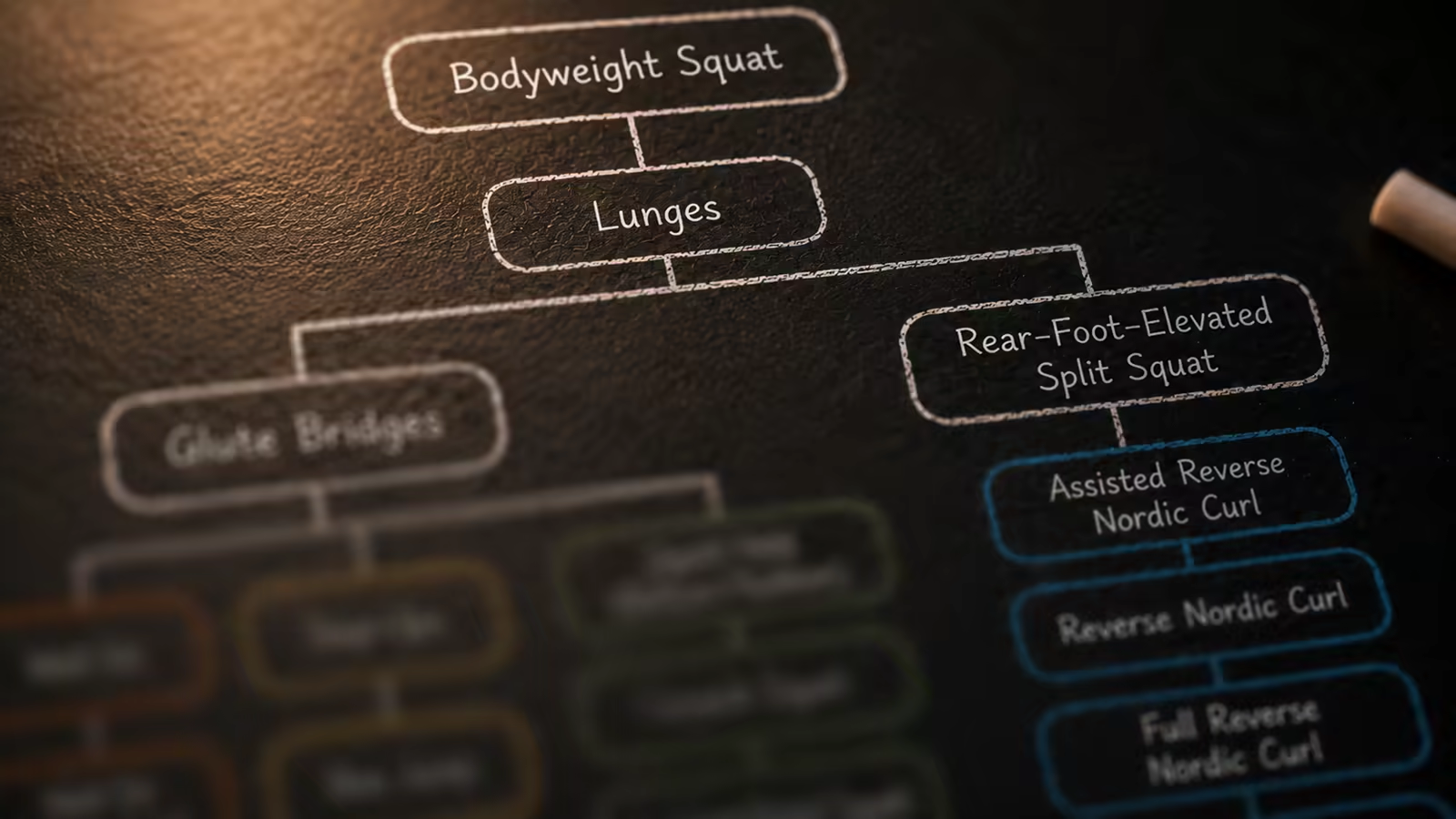
Body control develops in layers. You need basic hollow body tension before rings work makes sense. You need scapular stability before pressing skills build cleanly. You need hip flexor endurance before L-sit holds last longer than three seconds. Skip the layer and the skill above it has no foundation.
Every skill you can't do yet is just a prerequisite you haven't trained yet. That's not a dead end — it's a direction.
This is the core insight behind how CaliStack approaches progression. Rather than throwing a list of advanced skills at you and letting you figure out the path, it maps the prerequisite chain — showing you what each skill actually requires, and what you should be training right now to unlock the next level. Body control isn't a trait you have or don't have. It's a sequence of skills that can be learned in the right order.
What Happens After You Start to Get It
There's a specific feeling that arrives somewhere in the middle of a serious calisthenics journey. It's hard to name at first. You're doing a movement you've done a hundred times and something is different — it feels clean. Not just doable, but intentional. You can feel every part of your body doing its job. Nothing is fighting. Nothing is compensating. It just works.
That feeling is body control. And once you feel it, you start chasing it in every movement — not just the ones you're proud of, but the basics too. The way you stand. The way you breathe before a set. The way you lower yourself into a chair. The body you're living in starts to feel like something you actually chose.
The goal was never the skill. The goal was becoming someone who moves like they mean it.
Calisthenics doesn't just build a better body. It builds a more inhabited one. And that — quietly, slowly, rep by rep — is one of the most valuable things movement training can give you.
Train smarter. Progress faster.

