The Gravity Trap: Why Most Beginners Quit Calisthenics Too Early
You watched a video of someone gracefully defying gravity. They floated into a front lever, transitioned effortlessly into a muscle-up, and made it look like the laws of physics were merely a suggestion.
Inspired, you went to the local park, grabbed the bar, and reality hit hard. Your arms shook, your hands ripped, and that effortless muscle-up felt a million miles away. You tried again the next day, and the next, but progress felt invisible.
Motivation gets you to the bar. Structure keeps you from walking away from it.
The Illusion of Random Workouts
The most common reason beginners quit isn't a lack of strength; it is a lack of clarity. When you start traditional weightlifting, the progression is obvious: just add another five pounds to the bar. But in bodyweight training, how do you add 'five pounds' to a push-up?
Without a clear answer, most beginners resort to random, exhausting circuits. They do endless sets of sloppy push-ups and kipping pull-ups, hoping that sheer volume will eventually unlock advanced skills. This approach burns you out long before you build real strength.
Skipping the Prerequisites
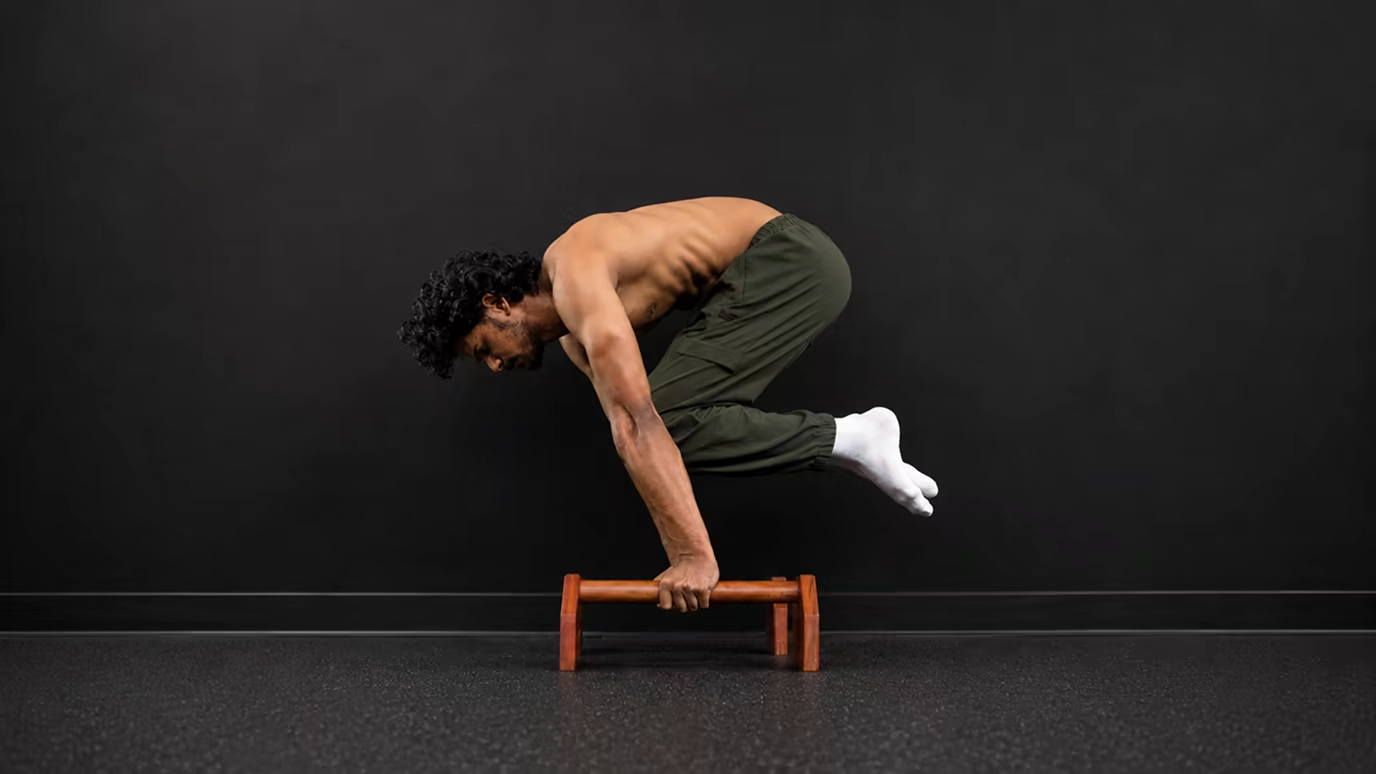
Calisthenics is not a collection of random exercises; it is a meticulously structured skill tree. Every advanced movement has a foundation of prerequisites that must be mastered first.
You wouldn't try to solve a calculus equation before learning basic algebra. Yet, every day, beginners attempt muscle-ups without having mastered explosive high pull-ups. They try handstands without developing basic shoulder mobility and core control. They attempt L-sits without understanding active flexibility.
This leads to frustration and joint pain. The mind wants to fly, but the connective tissue simply isn't ready. When progress stalls, the beginner assumes they just aren't cut out for calisthenics.
You don't unlock a skill by forcing it. You unlock a skill by mastering the step directly beneath it.
Embracing the Roadmap
Real progress in bodyweight training comes when you shift your mindset from 'working out' to 'practicing.' It requires a roadmap. You have to know where you are, where you are going, and exactly which step comes next.
This fundamental truth is exactly why CaliStack exists. Beginners don't need more motivational montages or grueling 100-rep challenges. They need a structured progression tree that breaks complex movements into achievable steps.
When you can visually see where you are on a skill tree, the frustration of feeling lost disappears. You understand why you are doing scapular pulls today, because you know they are building the foundation for your front lever tomorrow. You start to celebrate the small, crucial victories.

Surviving Your First 90 Days
If you want to survive the beginner phase, you have to drop your ego. Accept that you are a white belt in the art of controlling your own body. Respect the biomechanics of the movements.
Focus strictly on the basics. Build tendon strength through static holds, perfect your form on foundational pushes and pulls, and follow a logical progression path. Stop jumping ahead.
The journey is long, and the bar is unforgiving. But the moment you finally unlock that skill you have been chasing for months, built on a foundation of unshakeable basics? There is no better feeling in the world.
Train smarter. Progress faster.

