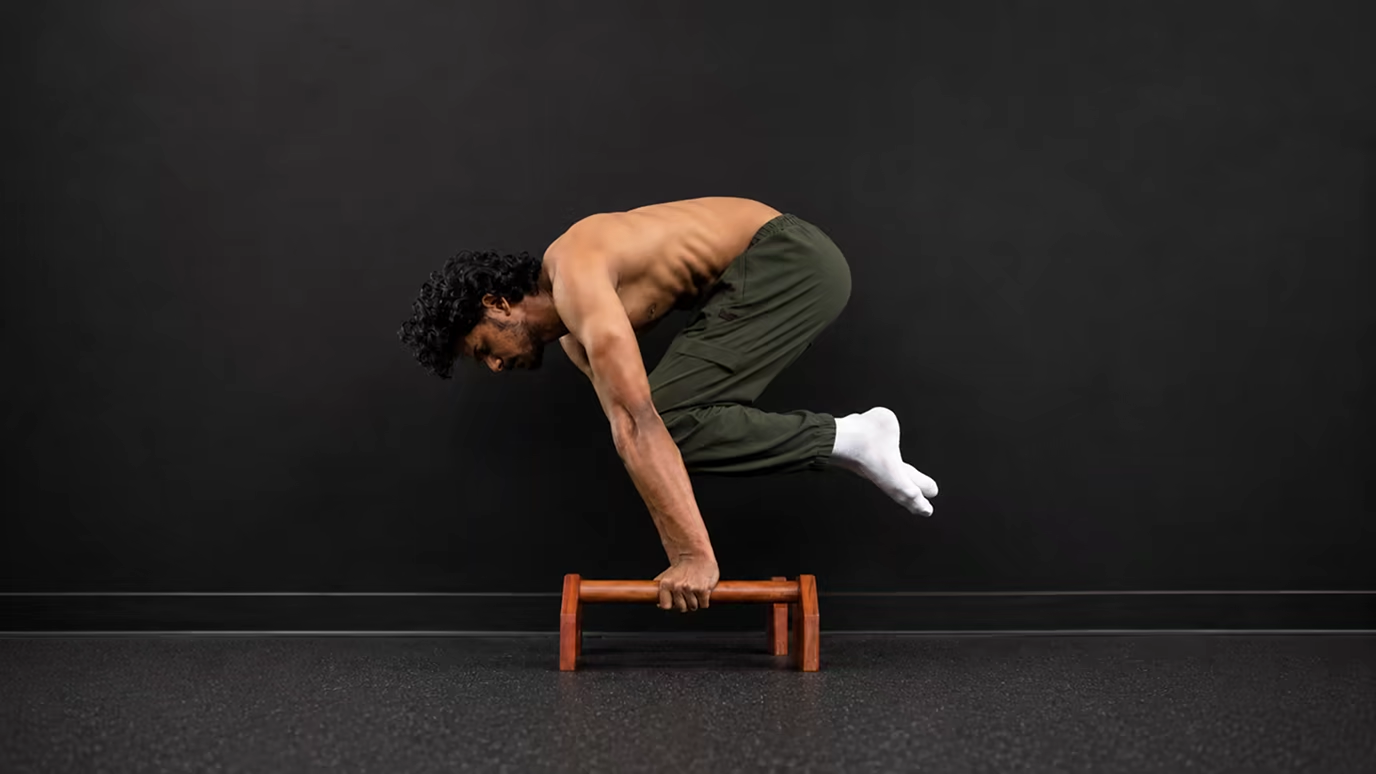
The Addictive Side of Calisthenics Progression
Discover why calisthenics progression can feel rewarding, track progress beyond new skills, and build motivation with realistic goals, rest, and boundaries.

The first time a movement feels different, you notice. An incline push-up becomes steadier. A squat feels less awkward. You repeat a skill that previously happened only once, almost by accident. There is something satisfying about being able to name the change. That is the addictive side of calisthenics progression: practice can become enjoyable enough that you look forward to returning. Here, addictive is a casual description of that appeal, not a medical label or a goal of losing control.
Healthy engagement leaves room for rest and the rest of your life. Harmful compulsion makes training feel obligatory even when it causes problems. The aim is to build a practice you choose, with progress you can recognize and boundaries you can keep.
Why visible milestones can make practice appealing
A goal such as getting fitter is hard to picture during an ordinary Tuesday session. Repeating a controlled movement at a slightly more demanding level gives you a specific result to work toward. The milestone connects today's practice to something you care about. You also get information along the way. You can notice where a repetition becomes rushed, try one adjustment, and see whether the next attempt feels more controlled. For someone who enjoys learning, that small problem can be a reason to return.
A systematic review of exercise motivation found associations between more self-directed motivation, feeling competent, and exercise participation. That supports taking personal choice and a sense of capability seriously. It does not prove that calisthenics, skill trees, or any particular milestone will make everyone enjoy exercise. CaliStack's progression-centered approach fits this interest in knowing what you are working toward. A progression map can provide direction; you still need goals and training choices that suit you.

Choose a challenge you can work with
An impressive future skill can be motivating, but your next session needs a nearer task. Choose a familiar variation you can perform with control and work on one detail. If every attempt collapses before you can observe anything, ask a qualified coach for a more manageable version. For an incline push-up, that detail might be lowering without rushing while keeping your body moving as a unit. Use a sturdy, non-slip support that cannot tip. Keep its height unchanged while comparing sessions.
Separate your outcome goal from your process goal. The outcome might be a floor push-up. The process could be completing your planned sessions, practicing the current variation, and recording the same technique detail each time. You cannot schedule the exact day a skill arrives, but you can decide how to practice today. Set a success standard before starting. For example, count only repetitions that use your chosen range and remain controlled. This is an editorial example, not a universal readiness test. A harder variation with a different standard should not automatically outrank cleaner work at your current level. Write the next task in terms you could explain to someone else: repeat this setup, watch this detail, then review the result. If the task feels uninteresting, you can choose another appropriate goal. You do not have to pursue handstands or advanced holds to make training worthwhile. Strength practice built around movements you enjoy is a valid direction, too.
“A useful milestone tells you what changed, not what you are worth.”
Keep a training log that answers one question
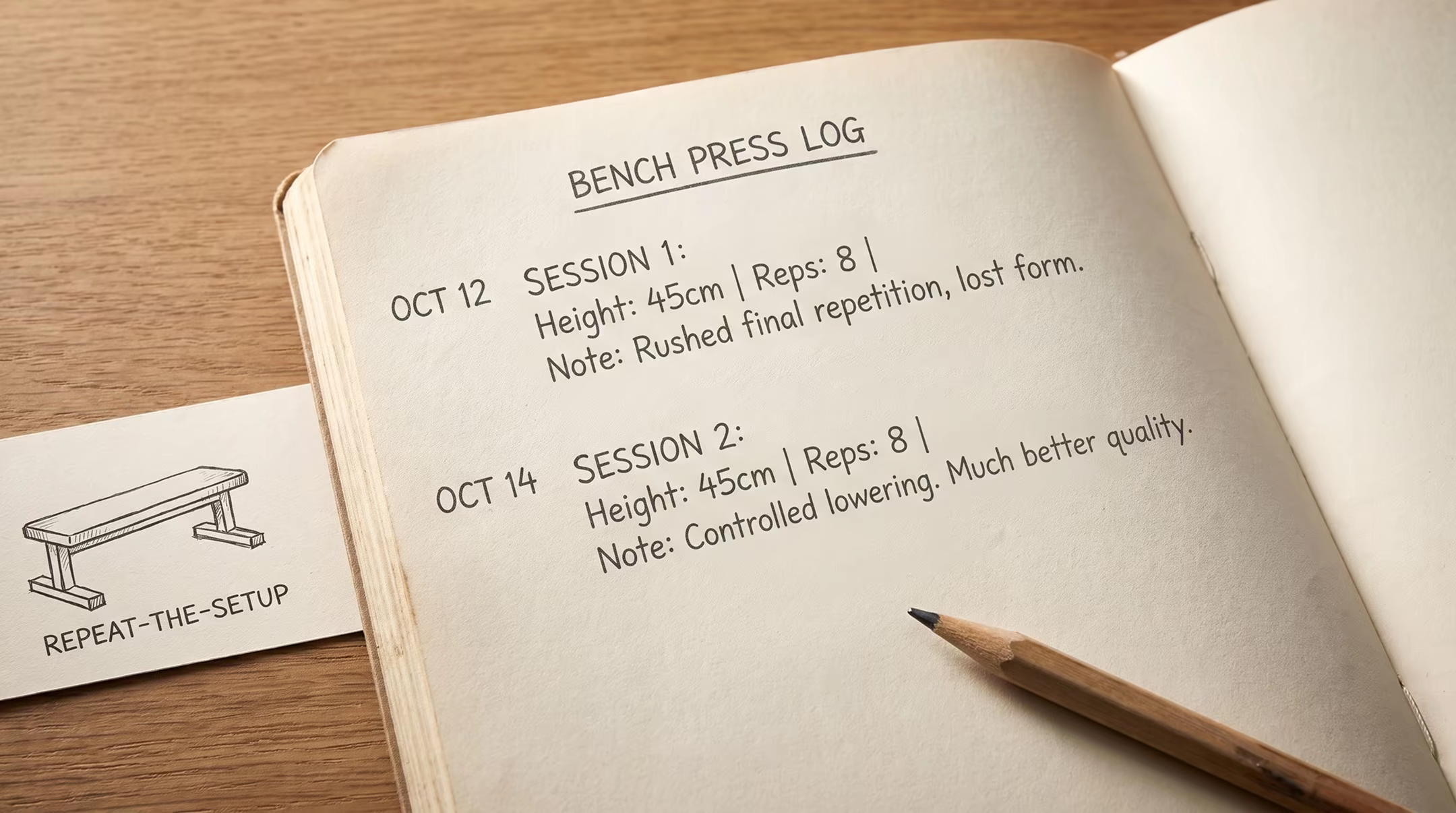
For tracking calisthenics progress, start with a question: what would help me choose my next session? You rarely need a paragraph about every repetition. Record the variation, setup, completed work, and a short quality note. Add context when it explains why two sessions are hard to compare. Here is a fictional log illustration, not a prescribed workout or a prediction of how quickly you should improve. The numbers show how to make a comparison useful.
Session A: incline push-ups on the same fixed bench; two sets of six; last repetition rushed in each set. Session B: same bench and chosen range; two sets of six; lowering stayed controlled throughout. Next decision: repeat this setup to see whether the control is repeatable, rather than immediately lowering the support.
The repetition count did not change, but the quality note did. That gives you something to acknowledge and something to check next time. If you change the bench height, range, and number of sets together, label the session as a new setup rather than treating it as a direct comparison. Keep the record somewhere convenient: a notebook or a simple phone note is enough. If tracking takes longer than your warm-up, simplify it. The log should support decisions, not become another performance you must maintain.
Count progress beyond the next unlock
Make room in your log for changes that do not introduce a new exercise name. More consistent range, less assistance, or the same work feeling more manageable can each be worth examining. So can repeating a result across sessions instead of getting it once. Learning also counts. Perhaps you can now identify why an attempt failed, choose an appropriate easier variation, or explain the cue you are practicing. These are useful developments even if they would make a very unremarkable video.
Compare your current work with your past self under similar conditions. Another person's social feed cannot tell you their starting point, coaching, or full practice history. Save demonstrations that help you understand a movement; do not use someone else's highlight as your deadline. Choose one performance measure and one process measure to review. For example, look at controlled repetitions alongside whether you followed the planned session limit. This makes the review broader than a search for a personal record.
Treat a plateau as a decision, not a verdict
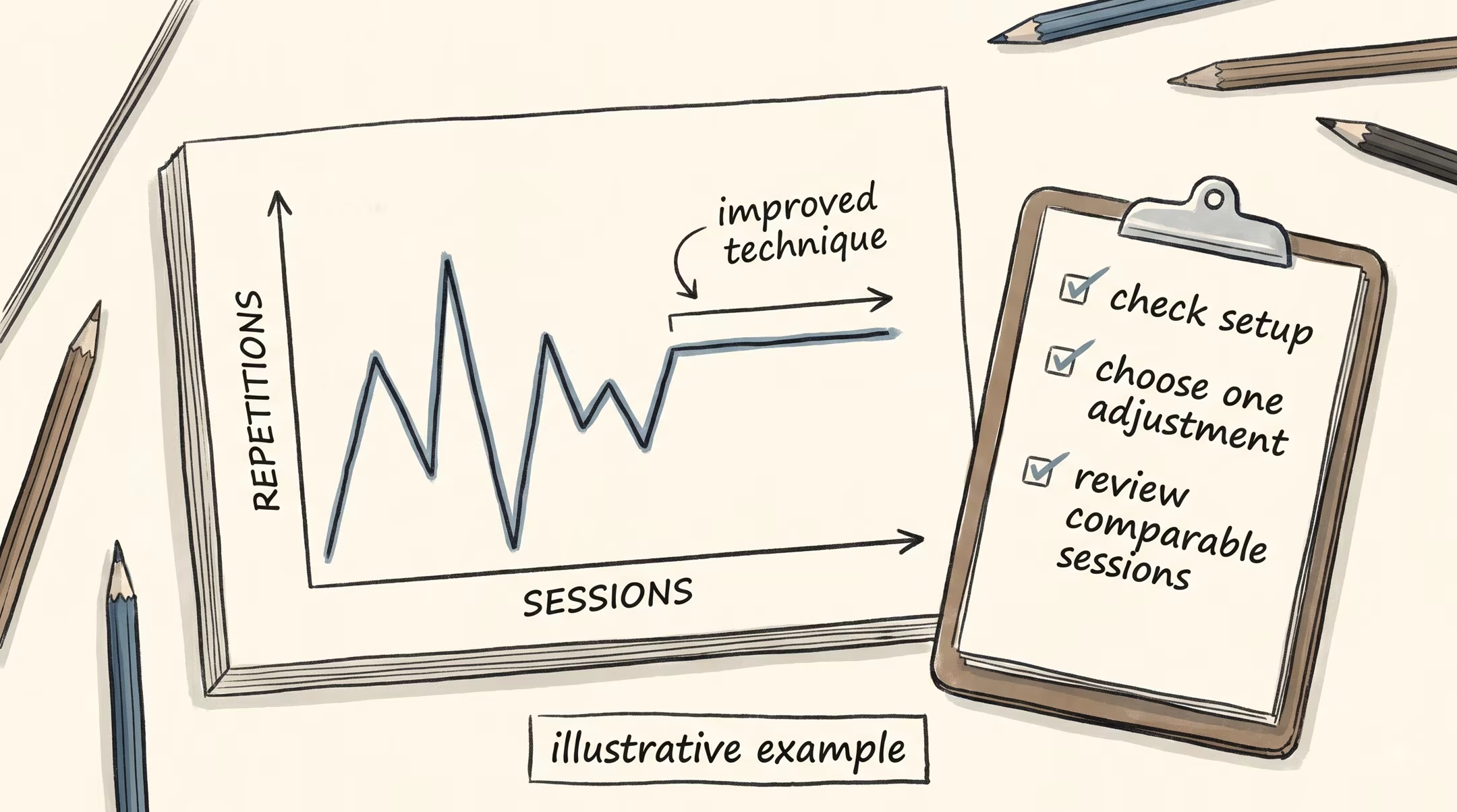
Do not build your definition of progress around an improvement every session. Your record may show stretches of similar results, an occasional worse day, or better technique alongside fewer counted repetitions. A stricter standard can change the numbers without making the session a failure. Before adding work, check the comparison. Did the setup change? Did you count repetitions differently? Were you rushing between attempts? Write down relevant context, including a disrupted night's sleep, without turning the log into a diagnosis.
If comparable sessions remain stuck, choose one adjustment rather than redesigning everything. You might keep the exercise and narrow your technique focus, make the variation easier, or ask a coach to review it. If you feel unusually worn down, consider reducing the work and seek advice for persistent concerns. Use a small review window, such as several comparable sessions, as an editorial planning tool rather than a guaranteed adaptation schedule. Check whether the adjustment is useful before changing another variable. You are trying to learn from the record, not force it to show an upward line. At a brief weekly review, note one thing that became clearer and one decision for the next session. If there is no measurable improvement, describe the practice honestly. Keeping the same variation can be a deliberate choice while you check technique; it does not require inventing a win or chasing a different skill for reassurance.
Decide when to stop before you get excited
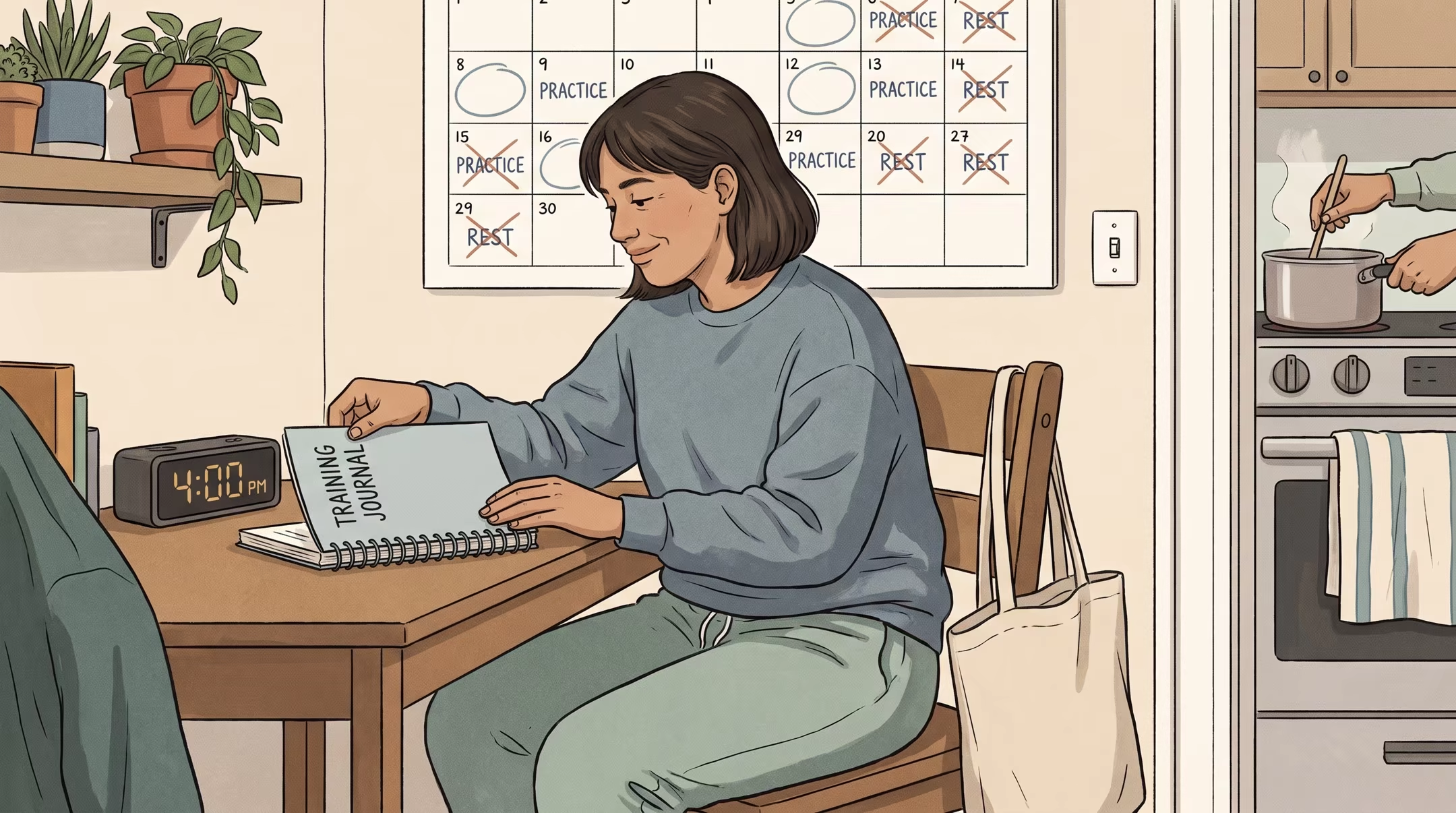
The urge to try again can be pleasant right up to the moment it overrides your plan. Before training, decide what ends the session: the planned work, a time limit, or a loss of the control you intended to practice. Stop an exercise that causes pain rather than bargaining for one more attempt. Keep any limit simple enough to remember. An illustrative rule is to finish when the planned sets are complete and write down the next idea instead of testing it immediately. A successful attempt is not an instruction to keep going.
Include rest in the plan. Rest supports recovery, and feeling excited about a skill does not remove that need. Protect time for sleep, work, and relationships instead of fitting them around an expanding session. ACSM's resistance-training guidance for healthy adults emphasizes regular participation and individualization; always training to failure is not a universal requirement. Use that perspective to keep a manageable routine. A missed session calls for a scheduling decision, not punishment or an extra-hard replacement workout.
Recognize when enjoyment becomes pressure
Frequently Asked Questions
Why does calisthenics progression feel so rewarding?
A visible milestone gives you a specific change to notice, while practice offers smaller problems to solve. That combination can appeal to people who enjoy learning movement. It is not universal: choose goals you care about instead of expecting a particular skill to create motivation.
Am I progressing if I have not learned a new skill?
Check more than exercise names. Cleaner repetitions, more consistent range, less assistance, and repeatable results may show useful progress. Compare similar setups, and include what you learned about technique or choosing an appropriate variation. A new unlock is only one possible result.
Should I practice every day to stay motivated?
Daily training is not a requirement for being committed. Follow a plan appropriate to your current abilities and recovery needs, with rest included. If resting produces persistent guilt or distress, take that seriously and seek professional support rather than adding sessions to relieve the pressure.
What should I track when motivation drops?
Record the exercise setup, completed work, and one quality note. At your next review, choose one manageable task and a clear stopping point. If your goals no longer interest you, revise them. Your training log is allowed to help you change direction, not only do more.
Want a clear plan for your next skill?
We built Calistack to show you the exact steps from where you are right now to your first handstand, muscle-up, or lever.