Why Calisthenics Is More Than Just Fitness
Explore the benefits of calisthenics beyond appearance: body control, learning, confidence and connection, with realistic ways to start your practice.

Calisthenics can give you reasons to train that have little to do with how you look. You might enjoy learning to lower yourself with control, noticing a technique change or sharing practice with someone who is also figuring things out. Those experiences can matter alongside strength and physical health. You don't need an impressive skill to begin exploring them. A wall push-up or a supported sit-to-stand can be something to practice thoughtfully. The benefits of calisthenics beyond appearance are possibilities you can investigate, rather than a personality upgrade promised by a workout method.
Body control starts with noticing ordinary movements
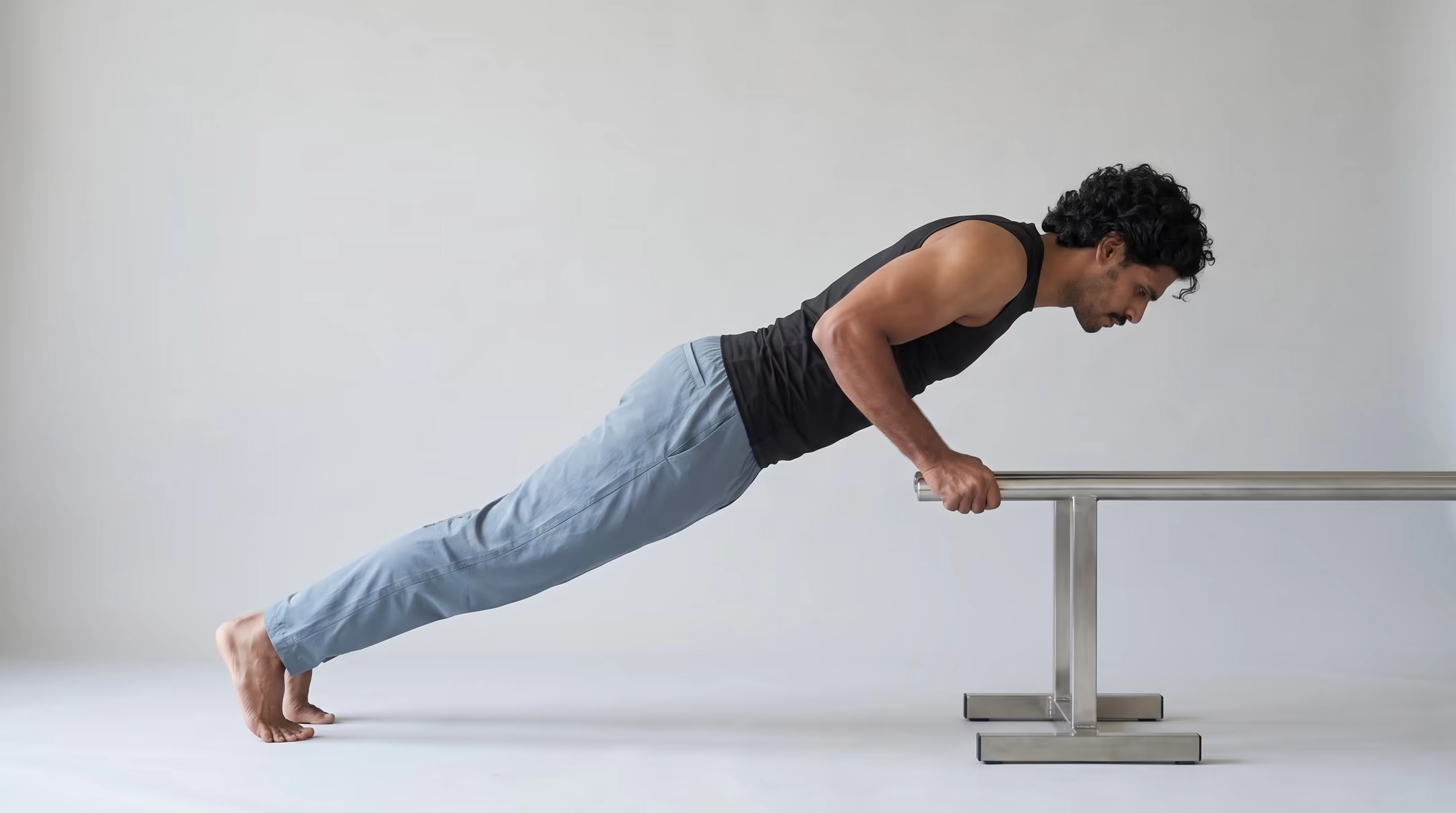
Calisthenics uses your body weight as resistance. That means an exercise gives you questions to answer about where your body is and how it moves. During an incline push-up, for example, can you lower and rise without your hips moving ahead of your chest? Can you use a range that feels manageable rather than dropping into the bottom? Those are practical observations, not a demand for perfect posture. Start with one detail, such as moving your torso together, instead of trying to monitor every joint at once. An easier variation may give you more room to notice what's happening.
Body control also depends on the movement you practice. Learning a supported squat doesn't automatically prepare you for balancing upside down. Strength, coordination and familiarity develop through appropriate practice; different skills ask different things of you. You can explore this without treating your body as a collection of faults. If a movement feels awkward, it may need a different setup, clearer instruction or a smaller challenge. The useful question is what adjustment lets you practice more comfortably and deliberately.
Learning gives a session another purpose
A workout can be useful even when it contains no new exercise. Repeating a familiar movement lets you compare how it feels, try a cue and see whether that cue helps. You might notice that you rush the lowering phase or lose track of your breathing when the effort rises. Choose a question small enough to answer during practice. For a supported sit-to-stand, that could be whether you can lower toward the seat without dropping the final few inches. You can record the observation without deciding that you must immediately use a lower seat. If you understand a movement but find it too demanding, an easier variation may help. If the effort is manageable but the instructions make little sense, seek clearer teaching rather than more repetitions. Those are different problems. A qualified trainer can watch an appropriate version and help you work out whether to change the challenge, the setup or the instruction.
CaliStack describes a progression-focused approach built around beginner assessment and skill trees. That framing can help organize what to practice, but a progression remains useful only when the exercise suits your current ability and circumstances. Free weights and gym machines also offer technique to learn and clear ways to adjust resistance. If you prefer those tools, you aren't missing some exclusive lesson in body awareness. Calisthenics is one way to make training feel like learning.
Confidence can come from specific experiences
Calisthenics confidence can be quite ordinary: knowing where to place your hands, recognizing a suitable starting variation or feeling comfortable asking for help. For some people, repeated experiences like these make unfamiliar exercise feel less intimidating. Keep that confidence tied to something you can describe. You practiced a movement you previously avoided. You learned when to stop a set. You chose a manageable version instead of copying someone else's harder one. None of these require a change in appearance.
“A useful goal can be as small as understanding the movement better than you did last time.”
Research on exercise motivation links feeling competent and having personally meaningful reasons to exercise with participation. It doesn't establish that calisthenics produces greater confidence than other activities, or that completing a skill changes your whole life. Some sessions will feel frustrating. Progress can pause, and an exercise you enjoy may still need adapting. If practice has become a source of pressure, you can shorten it, change the goal or take a break. A missed session or a skill you decide not to pursue doesn't need to become a judgment about yourself.

A flexible setting can make practice fit better
Some bodyweight exercises need little equipment, so you may be able to practice at home, in a suitable outdoor space or at a gym. That flexibility is useful when it matches your life. A quiet corner at home may suit one person; a staffed gym with accessible equipment may suit another. Location still matters. Check that the floor isn't slippery, supports won't move and you have enough room. Weather, privacy, disability access and the availability of safe facilities can all affect where practice is realistic. Bodyweight training isn't automatically free or accessible to everyone.
Pulling exercises usually need a properly installed bar, rings or another suitable training setup. Advanced work may require more equipment, space and instruction. Don't improvise a pulling station with furniture or a door that wasn't designed to support you. You can combine methods rather than insist on training entirely without equipment. A gym pulling exercise can sit alongside wall push-ups and bodyweight leg exercises. Choose the tools that help you train safely and cover your needs.
Other people can offer company without competition
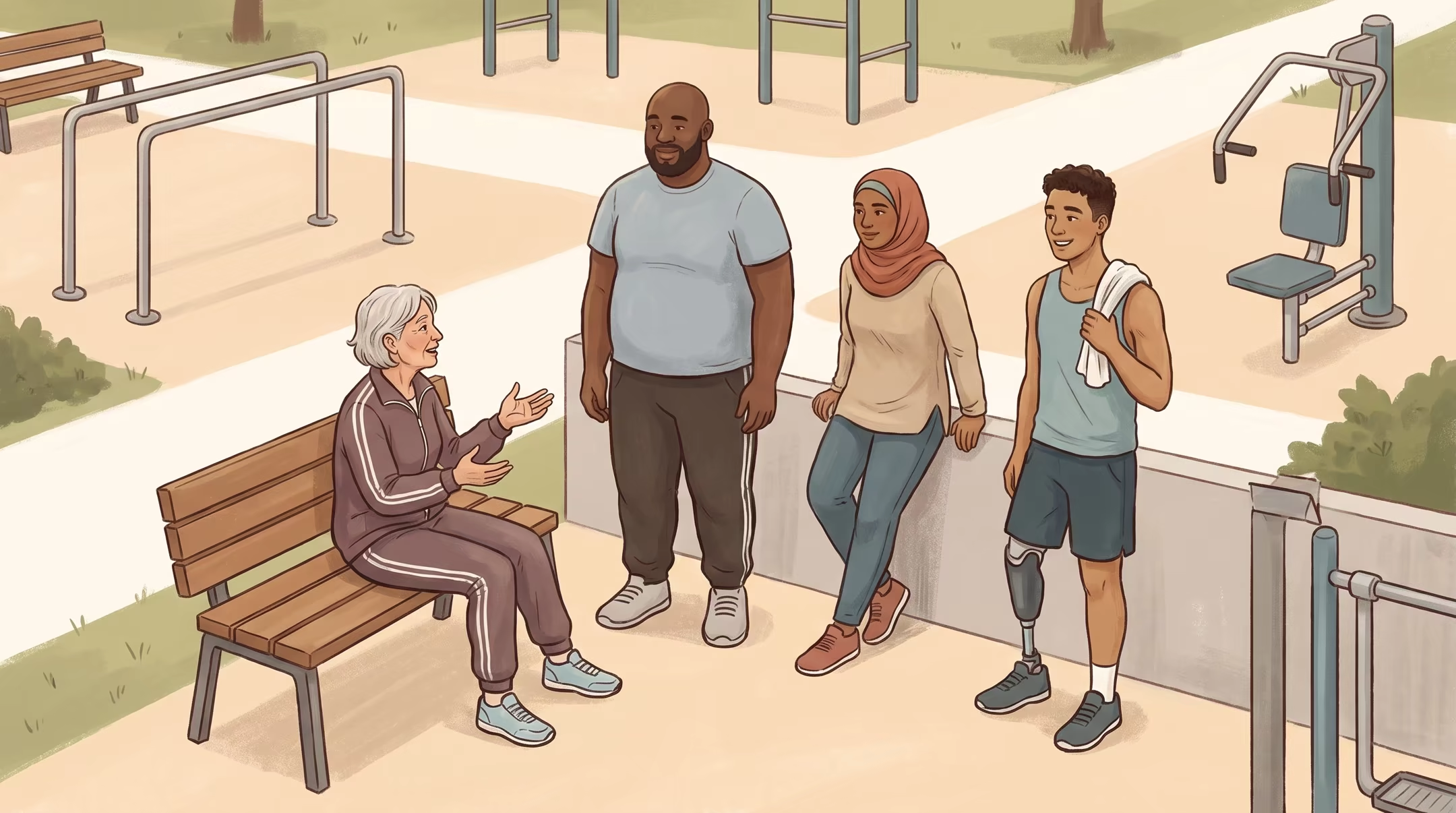
Practicing with a friend, attending a beginner class or visiting a welcoming training group can create opportunities for connection. You might exchange a useful cue, agree on a time to meet or simply enjoy having company. These are possible benefits of the setting, not special qualities shared by every calisthenics community. Look for people who respect different starting points and accept a decision to rest or use an easier exercise. Ask before offering technique feedback or filming someone. You don't owe a group an attempt at a harder skill, and advice from another participant isn't a substitute for qualified instruction.
Solo practice is also a valid choice. Connection can be occasional, such as a coaching appointment or a conversation about a shared interest. Training doesn't have to become your main identity or your entire social life.
Choose a starting point that leaves room to learn
If you're exploring calisthenics, start with choices rather than a list of skills you must achieve. Depending on your ability, a wall push-up, a sit-to-stand from a stable chair or a supported trunk exercise may be worth exploring. A trainer can help select alternatives when standing, floor access or loading your wrists is difficult. Warm up with easy movement suited to you, then use a variation you can control without straining through every repetition. Leave room to pause and check your setup. Stop an exercise if it causes pain; persistent or concerning symptoms need advice from a qualified healthcare professional.
A first week built around observations
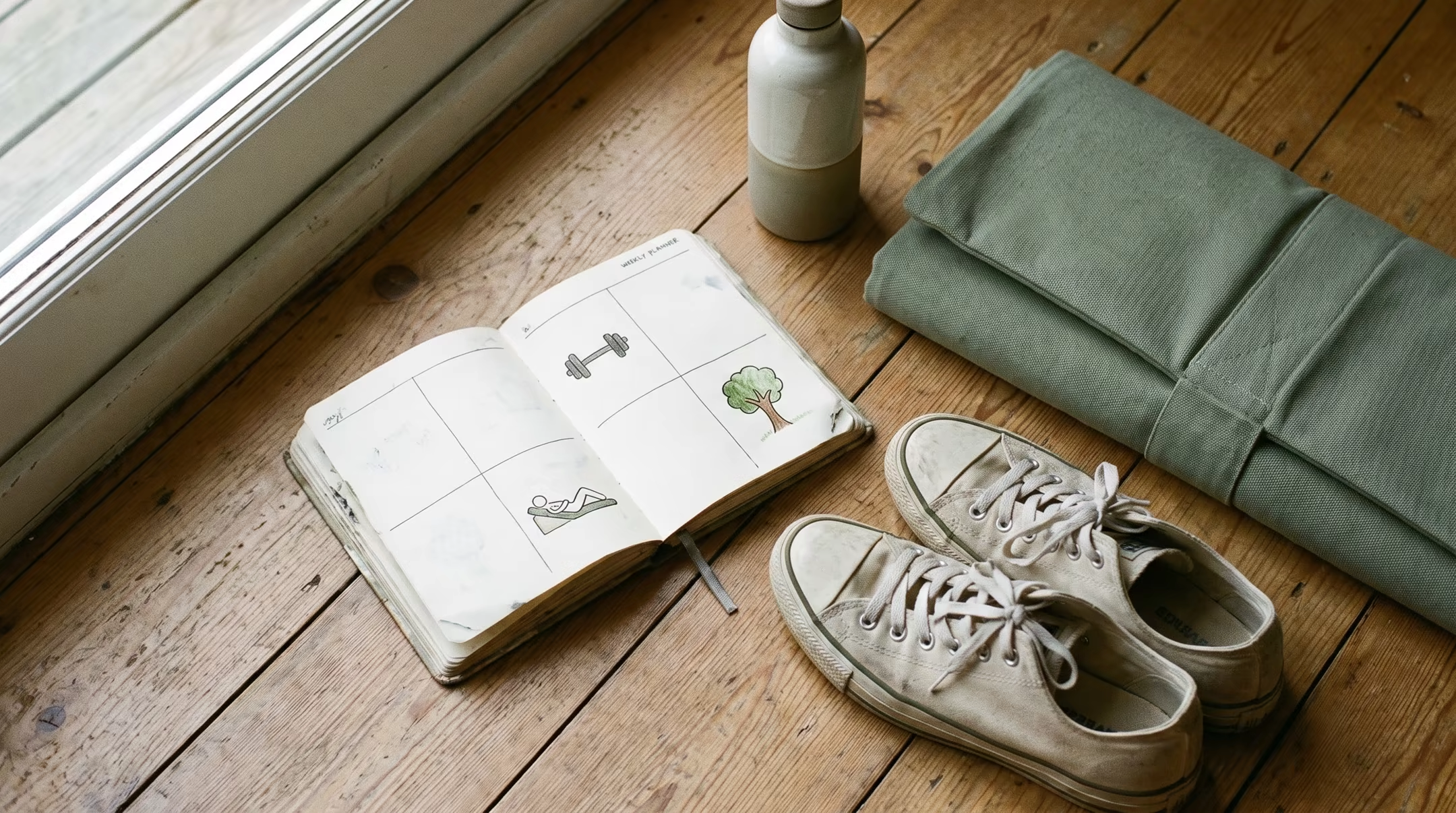
Here's an illustrative first week, not a complete workout prescription or a test you need to pass. Early in the week, choose one suitable pushing movement and one supported leg movement. Practice briefly and note your setup, what felt manageable and one detail you found difficult to judge. Leave a recovery day before another demanding session. Later in the week, revisit the same choices if you feel ready. Keep the setup similar enough to compare. Notice whether the instructions feel clearer, whether you can move more deliberately and whether anything needs adjusting. Repeating an easier version is a useful option.
At the week's end, review what you learned rather than searching for a transformation. Perhaps the chair height suited you, the wall push-up felt comfortable or the practice location was too crowded. Use that information to decide what to keep and what to ask a trainer about. Alongside strength practice, include aerobic activities you enjoy and can access, such as walking, cycling, swimming or wheeling. A few controlled bodyweight exercises don't automatically cover all your activity needs.
Keep health claims in perspective
Regular physical activity supports physical and mental health. That evidence applies broadly; it doesn't make calisthenics a treatment for psychological difficulties or prove that skill practice is uniquely therapeutic. Enjoying a session and receiving healthcare are different things. The broader appeal can be personal: learning something, finding a setting that works or spending time with others. You can value those experiences while also pursuing strength or appearance goals. Choose reasons that matter to you, and keep enough flexibility to change them.
Frequently Asked Questions
Can beginners benefit without learning advanced skills?
Yes. Appropriate basic exercises offer opportunities to practice control and learn technique. A handstand or muscle-up isn't a requirement for meaningful training. Choose movements that suit you and seek help adapting them when needed.
Does calisthenics improve confidence?
It may help some people feel more capable through practice and manageable challenges. That response isn't guaranteed or unique to calisthenics. Track concrete experiences, such as understanding an exercise, rather than expecting training to resolve wider confidence concerns.
Is calisthenics better than lifting weights?
Neither method is universally better. Bodyweight exercises and free weights can both support strength training and offer skills to learn. Your goals, preferences, access and physical needs should guide the choice. Combining them is also an option.
Can I practice calisthenics at home?
Some exercises can suit a safe home space, using a stable wall or support. Pulling and advanced skills may need purpose-built equipment and instruction. If your space or access makes home practice awkward, a gym or adapted class may work better.
Want a clear plan for your next skill?
We built Calistack to show you the exact steps from where you are right now to your first handstand, muscle-up, or lever.